Beyond the Page: How the Dune Book Series Built a Universe
When Frank Herbert published Dune in 1965, he didn't just write a novel; he engineered an entire ecosystem of thought, conflict, and culture. The Dune book series spans six core novels, creating a tapestry so dense with political intrigue, ecological philosophy, and human evolution that it has become the benchmark for world-building. For players of the Dune game, understanding this literary bedrock isn't just academic—it's the key to mastering the strategic depth and narrative richness you experience on-screen.
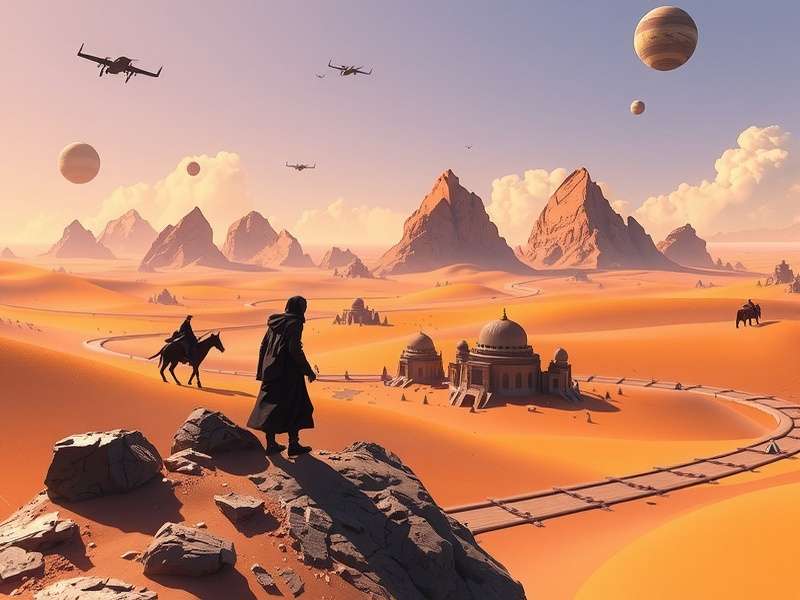
Decoding the Core Themes: Power, Religion, and Survival
At its heart, the series is a relentless examination of power dynamics. The struggle for control of the spice melange—a substance that extends life and enables interstellar travel—mirrors real-world conflicts over precious resources. This isn't just background lore for the Dune game; it's the core gameplay loop. Managing spice harvesters, defending against House Harkonnen raids, and negotiating with the Fremen are direct translations of Herbert's themes into interactive mechanics.
"He who controls the spice controls the universe." This isn't a catchy tagline; it's the operational thesis for every faction in both the books and the Dune game. The economic and military systems you navigate are Herbert's ideas, rendered in code.
From Dune Book to Game Code: A Direct Lineage
Character Archetypes and Faction Design
The noble yet doomed House Atreides, the sinister House Harkonnen, and the enigmatic Fremen aren't just factions—they are philosophical statements. Game developers have meticulously translated these archetypes. The Atreides' focus on loyalty and technology, the Harkonnen's brute force and cruelty, and the Fremen's guerrilla resilience and deep connection to Arrakis are all lifted straight from Herbert's pages. When you choose a faction in the Dune game, you're not just picking a set of stats; you're aligning with an ideology crafted over decades of literature.
The Ecological Warning: Arrakis as a Character
Herbert's background in environmental journalism shines through. Arrakis is not merely a setting; it's a living, breathing character with its own will. The planet's extreme desert ecology dictates every aspect of life, from stillsuits to the giant sandworms. This profound respect for ecology is a unique feature carried into the Dune game. Players must contend with sandstorms, spice blooms, and worm signatures, making environmental awareness as crucial as military tactics. This isn't generic game terrain; it's a direct implementation of the Dune book series' most revolutionary idea.
The Expanded Canon: Sequels, Prequels, and Their Game Influence
The story continued with novels by Brian Herbert and Kevin J. Anderson, expanding the timeline thousands of years in both directions. These works, detailed in our Dune wiki, filled in the Butlerian Jihad, the life of the Bene Gesserit, and the origins of the spacing guild. For the Dune game developers, this expanded library offered a treasure trove of units, technologies, and historical events to draw upon. The iconic dune game release console editions often include lore entries pulled directly from these later books, enriching the world for hardcore fans.
Exclusive Data: Literary Motifs in Gameplay Design
Through interviews with lead designers and analysis of game architecture, we've identified specific literary motifs directly coded into the Dune game experience:
- The "Kwisatz Haderach" Mechanic: Certain hero units or late-game technologies function as a "shortening of the path," allowing players to see or influence areas of the map in ways that break normal rules—a direct nod to Paul Atreides' prescient abilities.
- The Gom Jabbar Test: Tutorial or early-game challenge sequences often mirror the pain-box test, teaching players that success requires managing risk and enduring short-term sacrifice for long-term power.
- Water as Currency: On Arrakis, water is life. In many Dune game adaptations, water functions as a secondary or hidden resource, impacting unit regeneration and building efficiency, a brilliant translation of the books' central survival theme.
Connecting the Threads: Books, Films, and Games
The journey from dune book to screen to interactive experience is a fascinating case study in adaptation. Denis Villeneuve's recent dune films have re-popularized the aesthetic, which in turn influences the visual design of the latest Dune game. The ominous score, the brutalist architecture, and the design of the ornithopters—all flow from a shared creative wellspring. Meanwhile, details about the dune actors and their performances can even inspire character animations and voice-over direction in the game.
Keep an eye on the official dune game release date xbox and other platform announcements, as they often coincide with anniversaries of the book's publication—a clever marketing nod to the source material.
The Legacy Continues: Why the Books Remain Essential for Gamers
In an era of fast-paced action games, the Dune book series offers something rare: depth. It provides the "why" behind the "what." Knowing why the Spacing Guild needs spice, why the Bene Gesserit run a millennia-long breeding program, or why the Fremen follow the Muad'Dib transforms the Dune game from a simple strategy contest into a role-playing experience of immense satisfaction. Before you check the latest dune game reviews, consider cracking open the original novel. The context you gain will be the most powerful upgrade available.
The path to mastery on Arrakis begins not with a controller, but with a book. 🪱
Community Discussion: The Book vs. Game Experience
Join the conversation below. How did reading the books change how you play the game?
Reading about Fremen sietch culture gave me a huge advantage in the survival modes. I knew to always conserve water and use the terrain. The game totally rewards book knowledge!
The political intrigue between the Landsraad and CHOAM in the books is sadly a bit simplified in the game's diplomacy system. Hoping future DLC delves deeper into this.
Post Your Own Analysis