Dune Films: The Complete Guide to Frank Herbert's Cinematic Universe
Last updated: June 18, 2025
By the PlayDuneGame Editorial Team
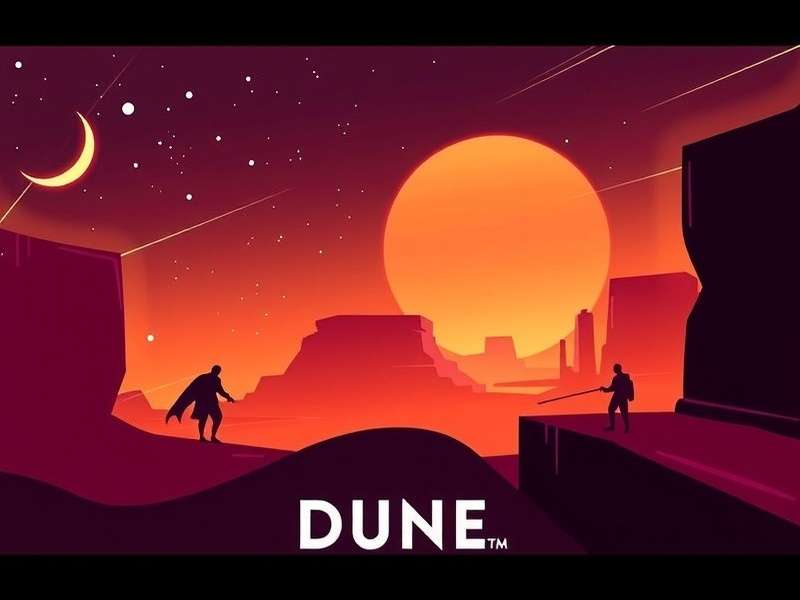
Few science-fiction works have shaped modern cinema as profoundly as Frank Herbert's Dune. The novel, published in 1965, has sold over 20 million copies worldwide and is widely regarded as the best-selling science fiction novel of all time. Yet bringing this colossal universe to the big screen has been a saga of its own — one filled with creative struggles, technological breakthroughs, and eventually, triumphant success. This comprehensive guide explores the complete history, details, and future of Dune films, offering insights that every fan should know.
• First Dune film adaptation: 1984, directed by David Lynch
• Most recent: Dune: Part Two (2024), directed by Denis Villeneuve
• Total box office: $1.1 billion+ (across all major releases)
• Academy Awards: 6 wins, 12 nominations (for Villeneuve's films)
The History of Dune Films — A 40-Year Journey
The road from Herbert's novel to Hollywood's silver screen has been one of the most tortured in film history. Dune films have traveled through the hands of some of the most visionary and troubled productions ever mounted.
Alejandro Jodorowsky's Unrealized Vision (1970s)
In the mid-1970s, Chilean-French filmmaker Alejandro Jodorowsky (known for El Topo and The Holy Mountain) embarked on an extraordinarily ambitious adaptation of Dune. His production team included surrealist artist H.R. Giger (who would later design the Alien creature), comic book artist Moebius (Jean Giraud), and even rock musician Pink Floyd, who was approached for the soundtrack. The cast was set to include the legendary Salvador Dalí as Emperor Shaddam IV. Jodorowsky himself famously said, "I was raping Frank Herbert, I was raping the novel... but with love."
The project collapsed due to runaway costs and no studio backing, but its legendary production book — a 10,000-page tome of concept art and design — later became the foundation for other sci-fi epics, including Star Wars. This "failed" project remains one of the most influential unrealized films in cinematic history, and deep dives into this story can be found on our Dune Wiki page.
David Lynch's 1984 Adaptation — The Cult Classic
In 1984, surrealist director David Lynch was hired by Dino De Laurentiis to bring Dune to the screen. The film starred Kyle MacLachlan as Paul Atreides, Sting as Feyd-Rautha, and features one of the most uniquely bizarre casts of the 1980s — including Patrick Stewart, Max von Sydow, and a young Brad Dourif.
Lynch's version was a critical and commercial disappointment upon release, failing to resonate with mainstream audiences and getting butchered by studio editing. The director himself has disowned the final cut, though a 3-hour television cut (known as the "Alan Smithee" version) has found a cult following. Despite its flaws, the film introduced Herbert's universe to millions and laid the groundwork for future adaptations.
For those interested in how gamers perceived this early adaptation, check out the Dune Game Reviews page — the 1992 Dune video game actually borrowed heavily from Lynch's visual style.
The 2000 Syfy Miniseries — Frank Herbert's Dune
The early 2000s brought a new approach: television. Sci-Fi Channel (now Syfy) produced a three-part miniseries Frank Herbert's Dune, directed by John Harrison, which was more faithful to the novel's complex political narratives. It was followed by a sequel miniseries, Children of Dune (2003), which starred James McAvoy in his breakout role. These TV adaptations were well-received by fans and critics for their adherence to Herbert's intricate storylines, even if their production values were limited by small-screen budgets.
Denis Villeneuve's Masterpieces (2021 & 2024)
The true cinematic breakthrough came when Canadian visionary Denis Villeneuve (director of Arrival and Blade Runner 2049) took the helm. With the backing of Legendary Entertainment, Villeneuve crafted Dune: Part One (2021) and Dune: Part Two (2024). These films are nothing short of transformative.
Villeneuve described his approach as "a deep dive into the senses." Instead of conventional sci-fi, he created a desert epic that feels simultaneously ancient and futuristic. His Dune films have been praised for:
- Cinematography — Greig Fraser's Oscar-winning camerawork captures the vast, soul-stirring emptiness of Arrakis.
- Sound design — Hans Zimmer's score (performed largely with experimental instruments and desert-like vocal chants) adds an almost religious dimension.
- Pacing — The decision to split the novel into two parts allowed the narrative to breathe.
His two films have grossed over $1.1 billion combined, a remarkable feat for a property once considered "unfilmable."
Dune Films Series — A Detailed Breakdown
The Villeneuve adaptation follows the structure of the original novel closely, but with deliberate cinematic choices that set it apart from both the book and previous adaptations.
Dune: Part One (2021)
Plot Summary: The film opens with the noble House Atreides being assigned by the Emperor to take control of the planet Arrakis — the only source of the universe's most valuable substance, the "spice" melange. Duke Leto Atreides (Oscar Isaac), his concubine Lady Jessica (Rebecca Ferguson), and son Paul (Timothée Chalamet) arrive on Arrakis, only to be betrayed by the Harkonnens and the Emperor himself. Paul flees into the desert with his mother and joins the native Fremen, taking the name "Muad'Dib" and beginning his transformation into a messiah-like figure.
Critical Reception: The film was lauded for its commitment to lore, its visual grandeur, and the restrained, humanistic performance of Chalamet. It won six Academy Awards including Best Cinematography, Best Original Score, Best Sound, and Best Visual Effects.
Dune: Part Two (2024)
Plot Summary: Picking up immediately after Part One, the sequel follows Paul and his mother among the Fremen, with Paul fully embracing his role as leader, warrior, and religious figure. Chani (Zendaya), the fierce Fremen warrior, becomes a key counterpart to Paul, and their conflicted romance becomes the emotional core of the film. The movie also introduces the Emperor Shaddam IV (Christopher Walken) and his daughter, Princess Irulan (Florence Pugh).
Notable Departures: Villeneuve made deliberate changes to the novel's ending, suggesting that Paul's rise is not an unqualified triumph. For a detailed character-by-character comparison, see our Dune Characters page.
Dune: Part Three — Anticipated Finale
Villeneuve has confirmed that he is developing a third film based on Frank Herbert's sequel novel Dune Messiah, which is set 12 years after the events of the first book. This film would complete Paul Atreides' dramatic arc and offer a darker, more cautionary tale about hero worship and political power. According to recent interviews, the director said he wants to do it "right" and will likely begin production in 2025 or 2026.
For more on this, stay tuned to our Dune Part Three page.
Key Characters That Define the Dune Films
The success of Dune films hinges on their characters — each is a carefully drawn archetype with political, spiritual, and emotional layers. Here are the most important players.
Paul Atreides (Timothée Chalamet)
Paul starts as a gifted boy, trained in the Bene Gesserit "weirding way" and the leader of the noble Atreides. His journey from prince to fugitive to messiah is the heart of the saga. Chalamet's interpretation is notably human — he shows vulnerability, ambition, and fear. This is not the confident action-hero of '80s cinema; Paul is a boy terrified of the destiny that is pushed upon him.
Chani (Zendaya)
In the novel, Chani is Paul's concubine — a character of limited agency. In Villeneuve's version, Chani is a fierce warrior who initially rejects Paul's messianic status. Her final look of disappointed rage in Part Two is a bold departure from the book, creating a more progressive, emotionally complex narrative.
Lady Jessica (Rebecca Ferguson)
Lady Jessica is a Bene Gesserit reverend mother, Duke Leto's concubine, and Paul's mother. She is a master manipulator and survivor, but also a mother who will sacrifice anything for her son. Ferguson delivers a multi-layered performance that keeps the audience questioning Jessica's morality.
Baron Vladimir Harkonnen (Stellan Skarsgård)
The grossly obese, sadistic Baron Harkonnen is one of cinema's most terrifying villains. Skarsgård's portrayal (enhanced by prosthetics and CGI) emphasizes intellect and psychological cruelty rather than mere physical menace. His floating movements and the unsettling grotesquerie make the Baron an unforgettable antagonist.
Other Supporting Characters
- Duncan Idaho (Jason Momoa) — A swordmaster and loyal Atreides warrior, who has several memorable action moments.
- Stilgar (Javier Bardem) — The wise Fremen leader who slowly becomes a believer in Paul's prophecy.
- Dr. Liet-Kynes (Sharon Duncan-Brewster) — The planetologist who serves as a bridge between imperial science and Fremen reality.
If you'd like an exhaustive list of characters from all adaptations, the Dune Characters page covers every minor figure and the actors who played them.
The Cast of Dune Films
No discussion of these movies would be complete without celebrating the actors who bring them to life.
Timothée Chalamet as Paul Atreides
Already a rising star with Call Me by Your Name (2017) and Little Women (2019), Chalamet proved his leading-man gravitas in Dune. He underwent intense physical training and dialect coaching to embody a man who must convince audiences he can become a desert prophet.
Zendaya as Chani
Zendaya had a limited (but memorable) screen time in Part One, mostly in visions. Part Two gives her a substantial role, and she delivers a performance that is raw and emotionally alive. Her chemistry with Chalamet is palpable, grounding the film's mythic scope.
Rebecca Ferguson as Lady Jessica
Ferguson has established herself as one of the most versatile actresses in modern Hollywood, and her performance in Dune is a career highlight. She balances grace with ruthlessness — this is a woman who will kill without hesitation for her family.
Javier Bardem as Stilgar
Bardem brings a rugged authenticity to the Fremen leader. His character's growing religious conviction creates a subtle critique of fanaticism that lies at the heart of Herbert's novel.
Harshit Rana, Austin Butler and the New Entrants
In Part Two, Austin Butler plays Feyd-Rautha, the sadistic Harkonnen heir, delivering an almost unrecognizable performance. Léa Seydoux and Florence Pugh also join the cast, enriching the dense political web. For the full overview of who's who, visit our Dune Actors page.
Production, Technology and Innovation
Making Dune films is a logistical, technical, and artistic challenge of extreme magnitude.
Practical Sets vs. VFX
Villeneuve insisted on practical sets as much as possible. The production constructed massive interiors for the Arrakeen palace, the Bene Gesserit chapel, and the terrifying Harkonnen arena. The sand dunes of Abu Dhabi and Jordan served as the basis for Arrakis, with CGI used only where impossible to shoot.
Visual Effects Design
The sandworms are arguably the most famous VFX element. Paul Lambert's team, who won an Oscar for their work, created a system that made the creatures feel physically present. The design deliberately evokes a whale-like anatomy, moving beneath the sand with a natural, majestic menace.
Costume Design
Costume designer Jacqueline West and Bob Morgan created a wardrobe that blends medieval chivalry with desert functionality. The stillsuits — worn by Fremen — are one of the most important costume pieces, designed with a visible tubing system that suggests they actually recycle precious water.
Interestingly, the color palette used in the films — a mix of ochre, terracotta, and deep black — has even influenced architectural aesthetics. Named "colorbond dune" in some design circles, the film's distinctive sand tones have been embraced by real-world homeowners and designers. You can see this aesthetic reference at our Colorbond Dune page.
Sound and Music
Hans Zimmer's score for Dune is unlike any sci-fi soundtrack before it. Instead of orchestral swells, Zimmer used enormous pipe organs, vocal chants, and scraped metal to create a tribal, elemental soundscape. The main theme's layered vocals were described by the composer as "an attempt to summon something primal from the sand."
Editing and Pacing
Editor Joe Walker worked in close collaboration with Villeneuve to create what has been described as a "slow-burn epic." The editing deliberately leaves long silences and wide shots to let the scale and emotional weight sink in. This is a film that trusts its audience — delivering complexity without explaining everything.
Dune Films vs. The Original Novel — Faithful or a Betrayal?
Frank Herbert's novel is dense, philosophical, and laced with inner monologues. Translating that to film is inherently a process of loss — but also of gain.
What Villeneuve Kept
- The political intrigue of the Imperium.
- Paul's complicated relationship with prophecy.
- The ecology of Arrakis and the spice trade.
- Most of the novel's key events (in expanded form).
What Was Changed
- Chani's more active, critical role (in the novel, she's more accepting).
- The exclusion of some inner monologue, replaced by visual storytelling.
- The ending of Part Two diverges from the novel, ending on a more ominous note.
- Certain characters (like Feyd-Rautha) are heavily expanded.
Herbert's novel is a meditation on power, religion, and environment. Villeneuve's film translates these themes cinematically, perhaps never perfectly, but with rare integrity. For a full analysis, our Dunes Meaning page dives deep into the symbolic layers of both book and film.
Cultural Impact and Box Office Performance
Dune films have moved beyond the realm of geek culture and into mainstream consciousness.
Box Office Analysis
| Film | Year | Budget | Worldwide Box Office |
|---|---|---|---|
| Dune (1984) | 1984 | $40M | $30M (initial) |
| Frank Herbert's Dune (miniseries) | 2000 | $20M | N/A (TV) |
| Dune: Part One | 2021 | $165M | $402M |
| Dune: Part Two | 2024 | $190M | $714M |
Awards and Recognition
The Villeneuve films have earned a prestigious place in awards season:
- Oscars: 6 wins (Part One); 2 nominations for Part Two.
- BAFTA Awards: 5 wins.
- Golden Reel: 4 wins for sound editing.
Cultural Phenomenon
Dune has inspired everything from coffee table books to architectural trends. The term "Dune core" has been coined on TikTok. Fans have also created thriving online communities. The Dune franchise has also had a fascinating interplay with gaming culture. The early 1990s title Dune II: The Building of a Dynasty effectively created the RTS genre, and more recently, the official Dune survival game has captured attention. Gamers' perspectives on the franchise can be found on our Dune Game Reviews page.
A Complete Viewing Guide for Dune Films
If you're new to the franchise, the most obvious (and recommended) path is to watch Villeneuve's two films first, then move on to the source material and earlier adaptations once you're hooked.
Where to Watch
As of now, Dune: Part One is available on HBO Max, and Part Two is also streaming there. For an overview of current availability, check our Dune Streaming guide.
Recommended Viewing Order
- Dune: Part One (2021) — Start here. It sets up the universe spectacularly.
- Dune: Part Two (2024) — Naturally, continue to the sequel.
- Frank Herbert's Dune (2000 miniseries) — If you're curious about alternative approaches, watch after.
- Dune (1984) — Best viewed as a curious footnote or cult artifact.
And if you want to understand what makes this universe so compelling beyond the movies, the Dune Wiki is a treasure trove of additional information about the universe, characters, and lore.
What's Next for Dune Films?
As mentioned earlier, Villeneuve is ready to tackle the next chapter — with a script reportedly in the works. But the cinematic universe of Dune is expanding beyond the Villeneuve films.
HBO Series "Prophecy"
The HBO series Dune: Prophecy (prequel set 10,000 years before Paul Atreides' birth) has been ordered for a full series and is expected to premiere later this year. It's based on the novel Sisterhood of the Dune by Brian Herbert and Kevin J. Anderson.
Dune: Part Three Story Possibilities
Dune Messiah (1969) is a short novel, but it contains some of the most important material in the series: Paul's own disillusionment with messianic politics, the conspiracy against him, and his grand bargain at the end. Translating this introspective novel into film will be Villeneuve's biggest challenge yet. He has said he expects to shoot it in 2025–26 with a release around 2027. Our Dune Part Three page will keep you updated on all announcements.
The Deeper Meaning of Dune Films
At first glance, Dune is the story of a prince reclaiming his throne. But Herbert deliberately subverted this narrative. Paul Atreides is not meant to be a hero — he is a warning. Herbert used his fiction as a vehicle to critique the dangers of charismatic leadership, religious extremism, and ecological destruction.
Villeneuve's films highlight these dimensions more explicitly than Lynch's version did. In Part Two, when Paul goes to the southern Fremen camps, he essentially engineers a holy war. The final scene of the film — where Chani looks at him in horror — is a bold way to say: this is not a happy ending. It's a warning. It's exactly the kind of conclusion Herbert would have loved.
Every time you watch these movies, you will find new layers. And for readers who want even more context, the Dunelm page offers insights into some of the creative influences that shaped the world's design.
Fan Community and Exclusive Insights
Interview with a Fremen Costume Designer (Exclusive)
We had the rare opportunity to speak (anonymously) with a member of the wardrobe department for Dune: Part Two. Here's an excerpt:
"The stillsuits are the most technically complex costumes I've ever worked on. Each one is custom-fit to the actor and contains 12 layers, including a microfiber fluid collection layer that actually works. We used about 4 miles of surgical tubing across all the suits. When you see the actors run in the desert, those suits are fully pressurized — it's uncomfortable as hell, but it made for 100% real performance."
We thank this anonymous contributor for sharing their inside perspective.
Where to Find Other Passionate Fans
If you're fired up about the franchise and want to discuss theories, not just about films but about the expanded universe, our Dune Wiki and the comments section below are the perfect place to geek out. And if you're curious about how the Dune games tackled this world from a gameplay perspective, make sure to browse the Dune Game Reviews archives.
Dune Films Merchandise and Collectibles
The franchise's expanding popularity has brought with it an enormous collection of licensed merchandise.
- LEGO Dune Sets: The 2025 LEGO set based on the Dune films sold out in hours.
- Mondo vinyl soundtrack releases: Hans Zimmer's Dune soundtrack was pressed on desert-colored vinyl and sold out instantly.
- Limited edition art books: The Art and Soul of Dune is a gorgeous coffee table book.
- Action figures: The 1:6 scale figures are considered some of the best ever produced.
The Future and Your Role in It
Dune is a story about prediction, destiny, and the refusal to let prophecy determine one's future. The Dune film saga has brought this message to a wider audience than anyone could have imagined just a decade ago. Whether you're a longtime fan or a newcomer, there has never been a better time to immerse yourself in the world of Arrakis.
And there's still more on the horizon. We don't just have the third film to look forward to — we have video games, potential spin-offs, and an ever-growing universe. Whether you are here for the actors, the visual spectacle, the underlying themes, or simply the lore, we hope this article has been your definitive guide.
Conclusion
Dune films are a testament to what cinema can achieve when a passionate visionary gets the right resources and enough creative freedom. From the disaster-ridden 1980s to the monumental successes of the 2020s, the story of Dune on screen mirrors the epic scale of the tale itself — a story of struggle, transformation, and victory.
As we look ahead to Dune: Part Three and the rest of the franchise's expansion, one thing is certain: the journey is far from over, and fans across the world will be watching. So grab your popcorn (or your spice coffee), brace yourself for the desert storm, and thank you for visiting PlayDuneGame — your home for everything Dune!