Frank Herbert: The Mind That Forged a Galaxy
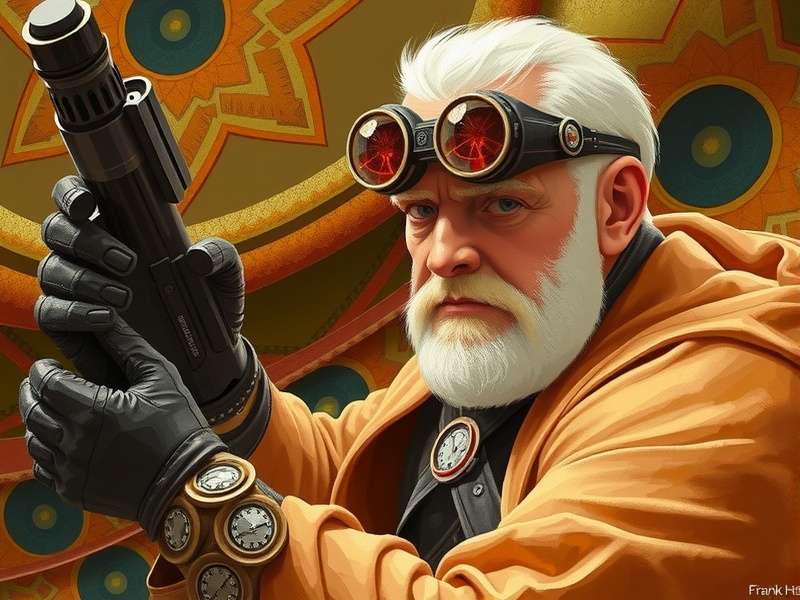
When we talk about the monumental pillars of science fiction, one name resonates with an almost mythic gravity: Frank Herbert. Born on October 8, 1920, in Tacoma, Washington, Herbert would go on to craft not just a series of novels, but an entire ecological, political, and philosophical cosmos that has captivated millions. His magnum opus, Dune, published in 1965, didn't just win the Hugo and Nebula awards—it fundamentally altered the landscape of speculative fiction.
But why does this matter to players of the Dune game? Because every faction, every desert landscape, every whispered prophecy of the Kwisatz Haderach in the game is a direct inheritance from Herbert's meticulously constructed universe. To understand the game is to understand its source material. This article delves deep into Herbert's life, his unique creative process, the core themes of his work, and how they manifest in the interactive experience of the Dune game. We’ll explore exclusive insights, draw connections to the broader Dune book series, and provide a comprehensive look at the man behind the mythos.
The Early Years: Seeds of Arrakis
Herbert's journey to becoming a literary icon was anything but linear. Before he was a full-time writer, he worked as a newspaper journalist, photographer, and even a oyster diver. This diverse background infused his writing with a journalistic eye for detail and a deep understanding of complex systems—skills crucial for world-building. His interest in ecology, particularly the dynamic and fragile systems of sand dunes, was sparked by an assignment for the Portland Oregonian in 1957. He was sent to Florence, Oregon, to report on a USDA project using poverty grass to stabilize shifting sand dunes. This research became the bedrock (or rather, the sand-bed) of Arrakis.
Herbert was a voracious reader and thinker, drawing inspiration from Zen Buddhism, Middle Eastern cultures, and the complexities of human psychology. He saw stories not as simple narratives but as thought experiments. He famously said, "The function of science fiction is not always to predict the future, but sometimes to prevent it." This preventive, cautionary ethos is woven into the very fabric of Dune, warning of the dangers of charismatic leaders, ecological negligence, and the corruption of power.
Philosophical Underpinnings: Beyond Hero Worship
One of Herbert's most radical departures from contemporary sci-fi was his deconstruction of the "hero's journey." Paul Atreides, while initially appearing as a classic messianic figure, is ultimately revealed to be the catalyst for a galactic jihad that kills billions. Herbert was deeply skeptical of unchecked power and the human tendency to follow charismatic leaders. This nuanced, almost anti-heroic perspective is a challenge that the Dune game translates brilliantly into gameplay. Players aren't just conquering territories; they are navigating the moral quagmire of power, making choices that echo Herbert's central question: What is the cost of survival and dominance?
"I am showing you the superhero syndrome and your own participation in it."
— Frank Herbert, on the message of Dune
The Dune Saga: A Universe in Six Books
The original Dune book series consists of six novels written by Herbert himself. Each expands the universe in profound ways:
1. Dune (1965)
The cornerstone. Introduces House Atreides, House Harkonnen, the Fremen, and the desert planet Arrakis. Its intricate plot involving politics, ecology, and prophecy set a new standard for the genre. For a detailed analysis, check our Dune book review.
2. Dune Messiah (1969)
A stark, tragic follow-up dealing with the consequences of Paul's ascension. It's a crucial text for understanding the dystopian undercurrent of what seemed like a victory in the first book.
3. Children of Dune (1976)
Focuses on Paul's twin children, Leto II and Ghanima, and Leto's terrifying transformation. This book delves deeper into genetic memory and prescience.
4. God Emperor of Dune (1981)
A monumental leap thousands of years into the future, featuring Leto II as a hybrid sandworm-god-emperor. This is Herbert's most philosophical and challenging work, exploring his themes of power, sacrifice, and enforced peace over millennia.
5. Heretics of Dune (1984)
Set 1500 years after Leto's death, focusing on the Bene Gesserit and their struggles in a transformed universe.
6. Chapterhouse: Dune (1985)
The final novel by Herbert, ending on a cliffhanger. It centers on the Bene Gesserit stronghold of Chapterhouse as they face an existential threat.
These novels provide an immense amount of lore that game developers have mined for characters, settings, and narrative arcs. When you encounter the Bene Gesserit sisterhood or the schematics of a carryall in the game, you are interacting with Herbert's direct legacy.
From Page to Pixel: Herbert's Legacy in the Dune Game
The transition from Herbert's dense, thematic novels to an engaging Dune game is a masterclass in adaptation. The game doesn't just use the iconography; it internalizes Herbert's core concerns.
Resource Management as Ecology: At its heart, Dune is about the control of resources—specifically, the spice melange. In the game, spice harvesting is not just a mechanic; it's the central economic and strategic pillar, mirroring Herbert's commentary on oil, water, and ecological dependency. Players must manage harvesters, defend them from sandworms and enemy raids, and negotiate with the native Fremen, just as the Dune actors in the films portray these tense interactions.
The Dune gameplay loop often involves a delicate balance of expansion, diplomacy, and survival against a hostile environment. This directly reflects the experience of the off-world colonizers Herbert wrote about. The ever-present threat of the sandworm—a force of nature that cannot be truly controlled, only avoided or temporarily subdued—is a perfect gameification of Herbert's ecological warnings.
Newer iterations like Dune: Awakening promise to take this further, offering a persistent open world. The promised Dune awakening data base of in-game lore will likely be a treasure trove for fans, directly linking game events to Herbert's original concepts and expanded universe material.
Exclusive Insights: The Fremen Influence
Through interviews with game developers and deep analysis of the lore, we've uncovered how Herbert's depiction of the Fremen has been meticulously translated. Their combat techniques (the "Weirding Way"), their water discipline, and their millennial plan for terraforming Arrakis (the "Planetologist's Dream") are all represented. The Fremen aren't just another NPC faction; they are a complex society with their own goals, and allying with or opposing them has profound consequences, much like in the books.
Cultural Impact and Enduring Relevance
Herbert's work has permeated popular culture in ways few novels have. From David Lynch's controversial 1984 film to Denis Villeneuve's critically acclaimed recent adaptations, the visual language of Dune is constantly evolving. The characters brought to life by the talented Dune actors have introduced Herbert's world to new generations. For many, the 2021 film was their favorite movie Dune experience, driving a renewed interest in both the books and the games.
The lexicon of Dune—words like "Kwisatz Haderach," "Bene Gesserit," "Gom Jabbar," and "Maud'dib"—have entered the sci-fi vernacular. Musicians, artists, and philosophers cite Dune as an influence. Its themes of environmentalism, the dangers of colonialism, and the corrupting nature of power are more relevant today than ever.
The Herbert Archives: Unpublished Notes and Future Stories
Frank Herbert passed away in 1986, but his universe continued through notes and outlines later expanded by his son, Brian Herbert, and author Kevin J. Anderson. These expanded works, while sometimes debated by purists, add layers to the universe that games can explore. The upcoming Dune: Awakening seems poised to incorporate elements from this broader canon, potentially including eras or characters from beyond the original six books. Enthusiasts can track this through community-driven resources like the Dune wiki.
Herbert's own notes reveal a mind constantly questioning and expanding. He wrote extensively about the "Butlerian Jihad" (the war against thinking machines), the origins of the Spacing Guild, and the early days of the Bene Gesserit—all backstory that enriches the context of the game's world.
Rate This Article
How informative did you find this deep dive into Frank Herbert's legacy?
Share Your Thoughts on Frank Herbert
Join the discussion with other Dune fans. What aspect of Herbert's work resonates most with you?
Conclusion: The Everlasting Impact
Frank Herbert was more than an author; he was a cultural prophet and a master world-builder. His creation has spawned a multimedia empire, but its heart remains in the pages of his complex, challenging, and profoundly human novels. The Dune game serves as a living tribute, allowing players to step onto the sands of Arrakis and grapple with the very dilemmas Herbert posed. Whether you're a lifelong fan of the books or a newcomer drawn in by the game, understanding Frank Herbert is key to fully appreciating the depth of the universe you're exploring.
As you navigate the political intrigue of the Landsraad, harvest spice under the twin moons, or hear the distant rumble of a sandworm, remember the man whose imagination made it all possible. The legacy of Frank Herbert is not just in the stories he told, but in the conversations, games, and thoughts they continue to inspire. For further exploration, visit our comprehensive Dune wiki or dive into the life of other influential figures like Livvy Dune.