An Introduction to the Dune Universe 📖
Few works of science fiction have achieved the sheer depth, literary sophistication, and cultural staying power of Herbert's Dune Books. First published by Chilton in 1965, Dune was an immediate game-changer — winning the Hugo Award in 1966 and the inaugural Nebula Award for Best Novel. The novel introduced readers to a future interstellar society where noble houses maneuver for power, where a desert planet holds the universe's most valuable substance, and where prophecy becomes a weapon of immense consequence.
The Dune Books series is not simply a story about a boy, Paul Atreides, who becomes a messiah; it is a sprawling, multi-generational meditation on politics, ecology, religion, human potential, and the toxic nature of heroes. Herbert's worldbuilding remains unmatched even decades later, incorporating elements of Islamic mysticism, Byzantine court intrigue, Jewish mysticism, Zen philosophy, and medieval feudalism.
This guide covers every Dune Book — from the original six novels to the prequels, sequels, and spin-offs written by Brian Herbert and Kevin J. Anderson. We'll present recommended reading orders, deep dives into major themes, answers to common questions, and a community reviews section.
"I must not fear. Fear is the mind-killer. Fear is the little-death that brings total obliteration." — The Litany Against Fear
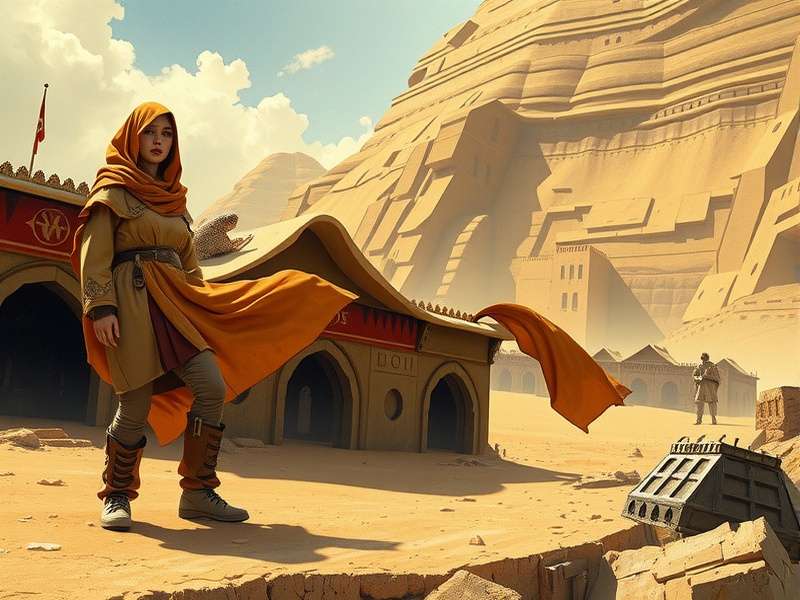
The world presented in the Dune Books is set thousands of years in the future, in a universe ruled by a feudal interstellar empire. Humanity has survived a machine war, the Butlerian Jihad, and has evolved through genetic manipulation and mental training. Key to this universe is the Arrakis Dune, the desert planet at the center of it all — the only source of the spice melange, the geriatric drug that grants extended life and prescience to the navigation guild's pilots.
As we move through this foundational universe, we also connect with the community around it: the actors who made the Movie Dune adaptations so popular, the art and building inspirations from Colorbond Dune for fans who want to bring the desert aesthetic home, and the immersive gaming worlds from Dune Awakening Map that allow you to explore Arrakis first-hand.
The Definitive Dune Books Reading List 📚
Understanding the full scope of Dune Books can be daunting because there are two approaches: chronological order and publication order. Let's start, though, with a simple catalog of the titles that make up the entire saga, complemented by the details fans care most about.
The Original Frank Herbert Saga
Frank Herbert's original Dune saga comprises six completed novels, spanning a period of roughly 5,000 years in the timeline of the universe. It is the most critically lauded and historically significant portion of the Dune Books corpus. Each novel adds layers of complexity to the political and theological threads woven in the first book.
| # | Title | Year | Key Events |
|---|---|---|---|
| 1 | Dune | 1965 | Paul Atreides's rise, the fall of House Atreides, Arrakis, Muad'Dib |
| 2 | Dune Messiah | 1969 | Paul's reign and guilt, the rise of the Bene Tleilax |
| 3 | Children of Dune | 1976 | The twins Leto II and Ghanima, the Abomination threat |
| 4 | God Emperor of Dune | 1981 | Leto II's 3,500-year rule as the God Emperor |
| 5 | Heretics of Dune | 1984 | Return to Arrakis, the Honored Matres |
| 6 | Chapterhouse: Dune | 1985 | The Bene Gesserit's final stand, the no-ship |
These six novels are often regarded as the complete philosophical arc, and many readers argue that the later novels become increasingly experimental in style, reflecting Herbert's vision of a vast and terrifying future. The series was never finished — Frank Herbert passed away in 1986, but his son, Brian Herbert, alongside Kevin J. Anderson, later continued the saga using his father's outlines.
Brian Herbert's Prequels and Sequels
Since the late 1990s, Brian Herbert and Kevin J. Anderson have expanded the Dune universe dramatically. These books are typically divided into several storylines:
Legends of Dune
- Dune: The Butlerian Jihad (2002)
- Dune: The Machine Crusade (2003)
- Dune: The Battle of Corrin (2004)
Prelude to Dune
- House Atreides (1999)
- House Harkonnen (2000)
- House Corrino (2001)
Heroes of Dune
- Paul of Dune (2008)
- The Winds of Dune (2009)
- Leto of Dune (2026, planned)
Schools of Dune
- Sisterhood of Dune (2012)
- Mentats of Dune (2014)
- The Dark Threat (2017)
- Navigators of Dune (2016)
The Great Schools of Dune
- Redempte (2019)
- The Duke of Caladan (2020)
- The Lady of Caladan (2021)
- The Heir of Caladan (2022)
These additional titles have divided the fandom. While some appreciate the effort to flesh out the universe, others criticize the fast-paced, action-heavy style that contrasts with Herbert's more cerebral approach. Nevertheless, they remain essential reading for those who wish to experience the Dune Books in their complete scope.
Short Story Collections and Anthologies
Beyond the novels, the Dune Books universe includes several anthologies. Notable among them is The Road to Dune (2005), which presents unpublished chapters and fragments from Herbert's original notes, as well as short stories woven around the lore. In 2024, the release of Sands of Dune added more short stories set between the original novels.
All of these entries expand the primary timeline, creating an ocean of content that keeps fans busy for months. When you read them all, you know why the Dune Books are considered one of the largest and most complex fictional universes ever crafted.
Dune Books Reading Order: Chronological vs. Publication ⏳
One of the most asked questions from newcomers to the Dune Books is: "Where do I start? What order should I read them?"
Publication Order (recommended for first-timers)
Most purists will tell you to read the Dune Books in the order they were printed. This allows you to follow the thematic development of Herbert's philosophy and appreciate the reveals as they occurred for the original audience. If you are just starting out, always read the original six first, then the later prequels and sequels. The contrast in writing style makes perfect sense when you see the original as a work of genius and the later books as an expansion.
Chronological Order
For readers who want to experience the historical timeline of the Dune universe, the Dune Books can be read in story chronology:
- Dune: The Butlerian Jihad (10,000 years before Dune)
- Dune: The Machine Crusade
- Dune: The Battle of Corrin
- Dune: Sisterhood of Dune
- Dune: Mentats of Dune
- Dune: Navigators of Dune
- Dune: House Atreides
- Dune: House Harkonnen
- Dune: House Corrino
- Dune (the original masterpiece)
- Dune Messiah
- Children of Dune
- God Emperor of Dune
- Heretics of Dune
- Chapterhouse: Dune
- Hunters of Dune
- Sandworms of Dune
Both approaches are valid. The chronological order emphasizes the grand historical sweep, while publication order preserves the narrative discoveries. This guide will always recommend publication order for rookies, but be aware that a chronological journey through the Dune Books can be an incredible experience in its own right.
Deep Dive: Key Themes in Dune Books 🧠
Herbert's genius lies in his ability to weave complex themes into a riveting story. Each Dune Book explores new layers, but certain core themes recur throughout the series and are perhaps more relevant today than they were sixty years ago.
The Politics of Arrakis and Despotism
The Dune Books are, at their heart, a political allegory. The fiefdom of Arrakis, the desert planet where spice is found, is treated as a colonial resource — exploited by the Padishah Emperor Shaddam IV, negotiated over by the Spacing Guild, and contested by Great Houses. Herbert's understanding of realpolitik is extraordinary, and he does not shy away from showing the ugly side of power.
One of the striking lessons in the series is that revolutionaries become tyrants if they are not careful. Paul Atreides, originally a heroic figure, becomes a despot whose holy war (known as the "Fremen Jihad") costs the lives of 61 billion people across the universe. Herbert deliberately breaks the hero myth to illustrate a deeper truth: the act of overcoming a system does not ennoble you to perpetuate the system's worst abuses. The Dune Game Pvp mechanics in the official multiplayer game show how the Atreides-Harkonnen rivalry is experienced interactively by players, letting you live the political maneuverings first-hand.
Religion, Prophecy, and Myth
Another central theme is the nature of faith and the control of religious narratives. The Bene Gesserit, an ancient sisterhood, have seeded the universe with "Missionaria Protectiva" — deliberately planted myths on primitive planets that can be activated at the right moment to protect operatives. Paul, and later his son Leto II, leverage this power structure. Herbert asks us: what does it mean to be worshipped? What does it mean to use faith as a tool?
"The highest function of ecology is understanding consequences." — The Zensunni aphorism
It is impossible to discuss the Dune Books without reflecting on the ecological dimension. Arrakis is a planet that has been almost entirely desertified, yet beneath the sands lies the "Old Man" of the desert — a giant sandworm, the larval form of which is the crucial ingredient for spice. Herbert, an ecological journalist before becoming a novelist, was profoundly concerned with the balance of natural systems. In the 1960s, when environmental awareness was still emerging, Dune was ahead of the curve in suggesting that human activity could be catastrophic, and also that the transformation of a planet's climate could be a kind of long-term political strategy.
The idea of terraforming Arrakis, which the Fremen dream about, is a form of ecological engineering that has direct parallels with contemporary debates on climate change and technological intervention.
Technology and Human Limits
"Thou shalt not make a machine in the likeness of a human mind," is one of the Ten Commandments of the Butlerian Jihad. The Dune Books are full of deep philosophical antagonism toward the explicit worship of AI and machines. Instead, Herbert imagines an aristocracy that uses "human computers" (Mentats) and "witches" (Bene Gesserit) who can train themselves to perform super-computational feats. This is a world where the mental evolution of humans, not artificial intelligence, is the highest technology.
However, Paul Atreides does carry within him the accumulated genetic memory of the Bene Gesserit breeding program — an almost unimaginable trove of human memory and experience. In a world of superhuman abilities, technology is no longer gadget-based but body-and-mind-based.
Ecology and Colonialism
The Dune Books also confront the ethics of water. On Arrakis, water is more valuable than gold. Every drop is conserved, even the breath of the dead is reclaimed. The Fremen have developed a "stillsuit" that traps moisture from urine, perspiration and even feces. This practical element makes the ecology of the desert visceral and relatable. The water market in Dune is a metaphor for oil extraction in the real world: a resource that causes war, exploitation and suffering, yet is indispensable for the functioning of an entire economy.
If you want to explore the actual geography and environment of this desert planet, the Dune Awakening Map resource offers interactive cartography and 3D walkthroughs. For collectors and architecture fans, Colorbond Dune covers the use of the iconic dune color scheme in real-world architecture.
Iconic Characters of the Dune Books
Paul Atreides
Born from the union of Duke Leto Atreides and Lady Jessica, Paul is the product of the Bene Gesserit breeding program — possibly the Kwisatz Haderach, the male Bene Gesserit who could cross the "inner barrier" and see the vast genetic memory of humanity. His prescient visions see the future with terrible clarity, and his real tragedy is that he cannot escape the dark path his visions reveal.
Leto II Atreides
The son of Paul's twins, Leto II, completes a different evolutionary pathway: he fuses with sandtrout to become a human-sandworm hybrid, the God Emperor, who reigns for thousands of years, deliberately squeezing the universe into a golden path that avoids humanity's extinction. His rule is the most controversial period in Dune Books history.
Bene Gesserit Sisterhood
They are not a "witch cult" — they are a survivalist species-wide breeding company. Their ultimate goal is to reach Kwisatz Hadera, but they have secret aims, preserved across thousands of years. Characters like Gaius Helen Mohiam, Lady Jessica, and later Darwi Odrade have complex arcs that cross the entire series.
The Spice and Its Significance
Melange — the spice of Arrakis — is the economic engine of the universe. It enables Spacing Guild navigators to safely navigate through folded space. It extends lifespans and awakens latent prescience. But it also creates a universal dependency that underpins the politics of the Dune Books. Anyone who controls the spice controls the universe. This is why, even after the fall of the Atreides and the transformation of Arrakis into a green world in later books, the spice remains the ultimate trump card.
Dune Books in Pop Culture and Media 🎬
The Dune Books have been adapted into multiple forms, with varying success.
The David Lynch Film (1984)
For many readers of the 1980s, the David Lynch Movie Dune was their first visual introduction to the saga. Though heavily criticized and even disowned by Lynch himself, this film retains a cult following for its art direction and scoring. Sting's performance as Feyd-Rautha remains iconic to this day, and the Dune Actor database—which catalogs every actor who has appeared across all adaptations—gives you a detailed overview of the casts through the years.
The Sci-Fi Channel Miniseries (2000, 2003)
Frank Herbert's Dune (2000) and Children of Dune (2003) were ambitious television miniseries that were praised for being much more faithful to the books than Lynch's film. They allowed the plotlines to breathe, and even included elements from Dune Messiah and Children of Dune in its sequel.
Denis Villeneuve's Films (2021, 2024)
Denis Villeneuve's "Dune: Part One" (2021) and "Dune: Part Two" (2024) are the most commercially successful adaptations of the Dune Books. With Timothée Chalamet as Paul, Zendaya as Chani, and a spectacular cast, the films bring a new level of realism and scale to the desert planet of Arrakis. They adhere closely to the first half of the original novel, and the second film pushes through to the end of the first book. The films have ignited enormous interest in the Dune Books, with many new readers discovering the source materials after watching the movie.
Video Game Adaptations
From the classic strategy game Dune II (1992) to the ambitious Dune: Spice Wars (2023), the universe of Dune Books has been fertile ground for gaming. In the multiplayer mode, the Dune Game Pvp arena pits Harkonnen, Atreides, Ordos, and other factions against each other, usually for military and economic supremacy. Meanwhile, Dune Awakening — a large-scale survival MMORPG — has generated a huge amount of buzz; exploring the Dune Awakening Map gives you a head start in the game's uncharted regions.
For fans of cosplay and costume design, the Dune Armor Trim section is an invaluable resource for finding the exact armor accents and fabric trims needed to reproduce the look of the Imperial military and the Sardaukar elite warriors.
Dune Books FAQ ❓
How many Dune Books have been published in total?
If we count the original 6 novels by Frank Herbert, along with the 2 sequels by Brian Herbert and Kevin J. Anderson (Hunters of Dune and Sandworms of Dune), plus the various prequels (Legends, Prelude, Schools, Great Schools), there are currently 24+ published novels in the Dune universe. This number is continuously growing as new books are released.
Do I need to read all Dune Books in order?
It is highly recommended that you at least read the original 6 Dune Books in publication order to fully appreciate the universe. The prequels are fun but are written in a very different style and may reduce the philosophical impact of the original series if you read them first.
Which Dune Book should I start with?
Always start with Dune. The first novel is the foundational masterpiece. If you get through it and are hungry for more, you can proceed to Dune Messiah and then the rest of the series. If you finish the first Dune and find it too dense, the later prequels may provide softer entry points, but you'd be losing some thematic layers.
Is Dune a trilogy?
No, Dune is not a trilogy. The original saga consists of six books written by Frank Herbert. There is a common misconception that Dune is a trilogy because of the way fans and publishers have grouped them. The original six are usually called the "Dune Chronicles" or simply the "Dune Saga."
Are Brian Herbert's Dune Books canon?
This is a contentious topic in the fandom. Brian Herbert has stated that he and Anderson used Frank Herbert's notes and outlines to fill in gaps in the universe. However, many pure fans treat the original six as canon and view the additional books as "expanded universe" fiction. The official publisher considers them all part of the Dune Books canon.
Community Reviews and Ratings ⭐
Related Dune Resources You Might Like 🔍
If you've enjoyed this Dune Books guide, be sure to check out these related resources:
- Dune Shoes — Explore footwear inspired by the desert world of Arrakis.
- Dune Book — The original novel and its many reprint editions.
- Colorbond Dune — Architectural color palette inspiration from Dune's aesthetic.
- Dune Awakening Map — Interactive map for the Dune Awakening survival game.
- Dune Game Pvp — Multiplayer combat and strategy insights.
- Movie Dune — All about the film adaptations.
- Arrakis Dune — Deep dive into the desert planet itself.
- Dunelm — A related interior inspiration source.
Additionally, if you're curious about the Dune Armor Trim or want to learn which Dune Actor played the most memorable characters, those guides have you covered.
The Dune Books universe is alive and expanding. With more adaptations on the horizon and a massive fan base growing daily, there has never been a better time to dive into the sands of Arrakis. Whether you are after political thrillers, philosophical musings, epic adventure, or environmentally conscious science fiction — the Dune Books have it all. Start reading today, and as the Fremen say, "May thy knife chip and shatter."
Leave a Comment
Share your thoughts on Dune Books with the community!