Dune Author: The Complete Guide to Frank Herbert’s Masterpiece Universe
When one speaks of the Dune author, the name Frank Herbert resonates across science fiction history like a sandstorm across Arrakis Dune. His 1965 novel Dune is not merely a book; it is a literary colossus—a multi-layered epic weaving ecology, politics, religion, and human evolution into a narrative as powerful as the giant sandworms that traverse the deep desert. To truly appreciate the depth of the Dune series, one must first journey into the mind of the man who created it.
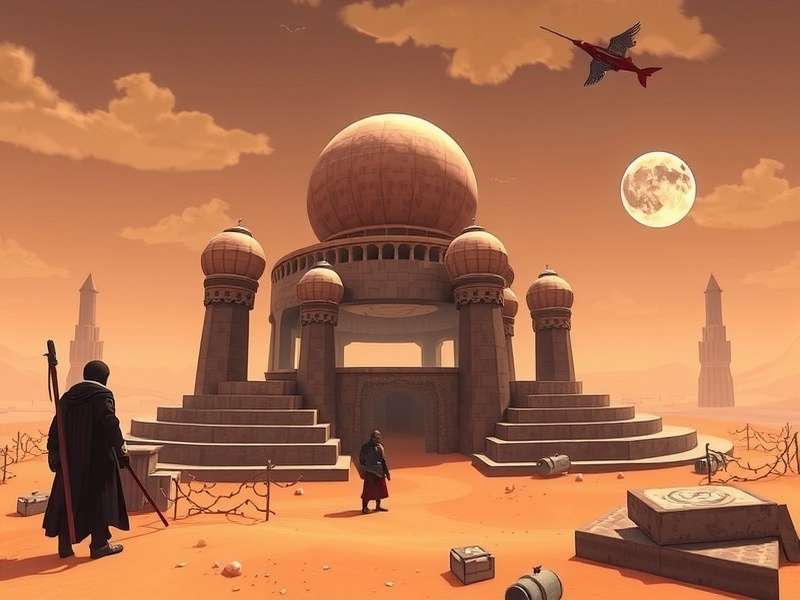
Frank Herbert was born on October 8, 1920, in Tacoma, Washington. His journey to becoming the most celebrated Dune author was as meandering as a desert river. He was a photojournalist, a Navy man, a teacher, a critic of psychology, and above all, an insatiable observer of the world around him. The seeds of Dune were planted in the early 1950s when he was assigned to write an article about the potential of sand dune stabilization in Oregon. That assignment, which he never completed as planned, instead became the genesis myth of one of humanity's greatest literary voyages. Herbert saw the sand dunes not as barriers but as symbols of an ecosystem and everything connected to it.
The world of Dune is a meticulously detailed ecosystem. Grande Dune Du Pilat France might rival the physical splendor of a real dune system, but Herbert took the concept of dunes and transformed them into an entire economic and spiritual foundation for an interstellar civilization. He asked: what if a single resource, tied to a desert planet's ecology, dictated the power balance of the universe? That resource, of course, became Spice Melange—the universe's most valuable commodity, essential for space travel, extending life, and unlocking human potential.
Frank Herbert: From Tacoma to Dune
Early Years and Education
Herbert's childhood in Tacoma was shaped by the Pacific Northwest's rugged natural beauty. He was a voracious reader and an early science fiction enthusiast. After attending Washington State University and later the University of Washington, his studies were interrupted by World War II, during which he served as a photographer in the U.S. Navy's Seabees. The discipline and global exposure during wartime broadened his worldview, instilling a deep interest in international politics and human behavior.
His journalistic career was equally diverse, covering everything from criminal justice to California politics. But it was his fascination with human psychology and ecology that would provide the twin pillars of Dune. Herbert carefully studied the works of ecologists and anthropologists, integrating these themes into his fiction in ways that were decades ahead of the curve.
The Turning Point: Writing Dune
In 1957, Herbert visited the dunes near Florence and Coos Bay in Oregon. Intending to write a magazine article on dune stabilization, he instead found himself captivated by the ecological significance of the sand and its relationship with the coastal environment. His notes grew into a fictional narrative. Drawing on his long-standing fascination with power, religion, and ecology, he began to craft a story about a desert planet ruled by noble houses, one whose barren surface held the key to intergalactic supremacy.
Herbert spent the next six years researching and writing. He created a rich backstory, filled with a complex interplay of factions: the noble House Atreides, the villainous House Harkonnen, the mysterious Bene Gesserit Sisterhood, and the indigenous Fremen people. In 1963 and 1964, the novel was serialized in Analog magazine under two parts ("Dune World" and "Prophet of Dune"). It was published in book form by Chilton Books in 1965—after being rejected by over 20 publishers who considered it too long, too complex, or simply too strange.
"The mystery of life isn't a problem to solve, but a reality to experience." — Frank Herbert
Upon publication, Dune won the Hugo Award in 1966 and the Nebula Award for Novel, marking it as the first sci-fi novel to win both. It remains one of the best-selling science fiction novels of all time, deserving every word of praise it receives to this day.
Understanding Dune: The Book That Changed Sci-Fi Forever
Plot Overview
Dune transports readers to the year 10,191 in a far-future galactic empire. The Emperor transfers control of the desert planet Arrakis (deemed Dune) from his enemies House Harkonnen to his potential rival House Atreides, led by Duke Leto Atreides. Arrakis is the sole source of the Spice Melange, making it the most critical planet in the cosmos. The Duke and his son, Paul Atreides, soon find themselves betrayed in an imperial plot, leading to the Duke's death and Paul's desperate flight into the desert with his mother, Lady Jessica.
Paul and Jessica find refuge among the Fremen, a fierce tribe determined to transform Arrakis' desert into a livable world. Paul learns Fremen ways, falls in love with Chani, and eventually becomes their messiah—a figure of prophesied destiny. Yet Paul’s journey is not a simple hero's tale. It is a tragic ascendancy in which he must confront the terrifying consequences of a holy war launched in his name, consuming billions of lives across the universe.
The plot is a tense, philosophical thriller, infused with political scheming, personal drama, and a profound meditation on the nature of power and destiny. It explores the price of being "the one," the dangers of prophetic knowledge, and the human capacity for environmental transformation.
Key Characters in Dune
The characters of Dune transcend traditional archetypes. For a deeper dive, check our Dune Characters guide. Below are the key figures:
Paul Atreides (Muad'Dib)
Paul is the protagonist and central tragic figure of the Dune universe. He begins as a brilliant, trained nobleman, special-born through Bene Gesserit breeding schemes. As he comes of age on Arrakis, he evolves into Muad'Dib, the messiah of the Fremen. His superhuman abilities—precognition, extraordinary fighting skills, political astuteness—set him apart. Yet his prescient visions trap him in an unbreakable chain of events.
Paul’s development shows the burden of power: his gift of prescience lets him see the violent future his followers will unleash, forcing him to walk a knife-edge between his personal desires and the terrible necessity that seems to drive the universe. His choice at the end of Dune to become Emperor and lead the Fremen Jihad—even as he foresees its horror—represents one of the most tragic arcs in literature.
Lady Jessica
Jessica is Duke Leto's concubine and a Bene Gesserit Reverend Mother in her own right. Her refusal to bear a daughter (as the Sisterhood demanded) to create the Kwisatz Haderach contributed to the politics of the Imperium. Her devotion to her son Paul and her understanding of the Bene Gesserit's secret manipulations make her an essential actor. She transitions from a supporting role to the revered Reverend Mother of the Fremen, carrying within her the genetic memory of her ancestors—a gift and a curse.
Baron Vladimir Harkonnen
The Baron is the grotesque, ruthless antagonist of the first volume. Bloated by his obsession for power and pleasure, he embodies the decadence and evil that House Atreides stands in opposition to. As a strategic genius, his destruction of House Atreides sets in motion the rebellion that eventually leads to his own death at the hands of Alia, Paul's sister.
Chani
Chani is the Fremen woman who becomes Paul's wife and the mother of his children. She represents the deep ties of desert culture and loyalty.
Major Themes: Politics, Religion, Ecology
Politics and Power
Dune is a political masterclass. The Imperium is sustained through a delicate balance between the Emperor, the Great Houses, the Landsraad (the noble council), and the Spacing Guild (whose monopoly on space travel reinforces its own political sovereignty). Herbert weaves complex feudal systems, strategic alliances, economic warfare, and backroom machinations. In this realm, gun battles matter less than political scheming. This is the practical politics of Machiavelli relocated to deep space.
Religion and Messianic Tropes
Herbert deliberately deconstructed the messiah myth. Paul is not a "chosen one" in a traditional sense; he is the result of a carefully managed breeding program whose existence has been prophesied by the Bene Gesserit for centuries. However, Herbert warns about religious zealotry and the dangers of charismatic leadership. Paul’s holy war demonstrates what happens when faith is weaponized—only too late the universe discovers the cost. Herbert’s examination of religion as both a tool of control and a source of liberation remains one of the most sophisticated in science fiction.
Ecology and the Environment
The environmental dimension of Dune can hardly be overstated. Arrakis is a climate-change parable, with ecology as both the setting and the central dynamic. The Fremen hold a dream of terraforming their world, turning it green with open water and lush vegetation. Their conflict is not just political but ecological. Dune Wiki enthusiasts often point to the elegant interplay between the sandworms, the spice, and the water-based ecology, noting that Herbert designed an ecosystem that is internally consistent and scientifically plausible.
Arrakis Dune and the Spice Melange
Arrakis Dune is the heart of the universe. This planet, with its extreme desert environment and giant sandworms, is far from a mere backdrop. Its vast deserts, treacherous storms, and precious Spice deposits define the geopolitical landscape of the entire Dune universe.
Because of the unforgiving nature of the desert, life on Arrakis demands radical adaptation. The Fremen have developed stillsuits to reclaim their body's precious water, they ride the giant sandworms for transport, and they practice a water-efficient way of life. The entire planet is a testament to the beautiful, fragile balance of ecosystems—and a warning that human beings are often their own worst enemy when they disturb that balance.
The Dune Series: A Complete Book Guide
Original Dune Series by Frank Herbert
Frank Herbert wrote six novels in the original Dune series before his death in 1986. They are:
| Book | Year | Plot Focus |
|---|---|---|
| Dune (Dune) | 1965 | The rise of Paul Atreides as Muad'Dib and the Fremen rebellion. |
| Dune Messiah (Dune Messiah) | 1969 | Paying the price for the Jihad; political isolation; the conspiracy against Paul. |
| Children of Dune | 1976 | Paul's children—Leto II and Ghanima—and the struggle for the future. |
| God Emperor of Dune | 1981 | The tyranny of Leto II and his golden path across millennia. |
| Heretics of Dune | 1984 | The crisis in the Old Empire and the return of the Bene Tleilax. |
| Chapterhouse: Dune | 1985 | The conflict between the Bene Gesserit and the Honored Matres. |
Each volume builds on Herbert’s philosophical explorations while pushing the story into new philosophical dimensions. If you are looking for an in-depth, spoilery perspective, our Dune Book Review is a great companion to your reading journey.
God Emperor of Dune: The Most Unusual Sequel
Beloved by many and perplexing to others, God Emperor leaps thousands of years into the future, where Leto II has merged with sandtrout to become a symbiotic organism, ruling as a near-immortal tyrant. His dream—The Golden Path—aims to save humanity from stagnation by forcing it to embrace diversity and unpredictability. It is a bizarre but profoundly philosophical masterpiece.
Expanded Dune Universe: The Son Continues
After Frank Herbert’s death in 1986, his son Brian Herbert, along with Kevin J. Anderson, wrote numerous prequel novels and sequels, expanding the timeline thousands of years backward and forward. While these are not always held at the same level as the original, they fill in the gaps of the Dune universe's history and remain popular entries for dedicated fans. The expanded universe explores the Butlerian Jihad, the origins of the Bene Gesserit and Spacing Guild, the fall of the Old Empire, and further adventures of Duncan Idaho clones, adding layers to the Dune Characters saga.
The Masterful Worldbuilding of Frank Herbert
The Spacing Guild and FTL Travel
The Spacing Guild uses the Spice to navigate interstellar space. Without it, the universe falls apart. This dependency makes Arrakis the fulcrum of the cosmos. The Guild's monopoly on faster-than-light space travel is carefully tied to the psychedelic properties of Spice, making economics, navigations, religion, and politics inseparable.
The Bene Gesserit
The Bene Gesserit Sisterhood is an ancient order in the Imperium, part religion, part breeding agency, part espionage agency. They have shaped the course of human evolution for millennia, manipulating bloodlines and engineering social and political realities. Their aim was to produce the Kwisatz Haderach—a male with the powers of the Guide, the Mentat, and the Reverend Mother—but their plan goes horribly wrong when one of their own, Jessica, deviates, and Paul is born instead of a girl.
The Fremen
The Fremen are the indigenous inhabitants of Arrakis. They survive in the desert with a distinctive culture forged through centuries of harsh conditions. From their efficient stillsuits to their mystical zensunni religion and their courage in facing worms head-on, the Fremen are icons of resilience and adaptability. They also dream of restoring Arrakis to a green paradise, a hope of ecological transformation that shapes their entire society.
Dune Adaptations: From Page to Screen
David Lynch's Dune (1984)
David Lynch's film, while ambitious and visually striking, faced the monumental challenge of condensing a very complex book. While it earned a cult audience, its box-office failure in 1984 discouraged studios from touching Herbert’s tale for decades. Yet the unique atmosphere, the sets and costumes, and the music of Toto and Brian Eno helped the film remain a stubborn classic of theatrical sci-fi.
Sci-Fi Channel Miniseries (2000)
The Sci-Fi Channel (now Syfy) produced a miniseries that was closer to the book, splitting Dune into three parts and Children of Dune into another three. Although the visual effects show their age, its respect for the source material won praise from many long-time fans.
Denis Villeneuve's Dune (2021) and Dune: Part Two (2024)
Denis Villeneuve's adaptation, with Timothée Chalamet as Paul and Zendaya as Chani, earned critical and commercial acclaim for its loyalty to the book and its stunning desert landscapes. Dune: Part Two takes the story further, exploring the Fremen's cultural essence and Paul’s martial ascent. The films have put the Dune franchise back on the map of cinematic eras.
Game adaptations are also arriving. Fans eager for an interactive Arrakis can study the Dune Awakening Map to explore the world in detail. And for those awaiting the newest console update, our source on the New Dune Game Ps5 Release Date will keep you posted.
Why Dune Author is More Relevant Than Ever
Environmental Lessons
As our world faces ecological crises, climate change, and shifting weather patterns, Paul Atreides' understanding of a fragile ecology resonates more deeply than ever. Herbert did not simply write an adventure; he described how a planet's environment shapes its politics, its economy, and its people. The idea of turning a desert into a garden—and the complex balance required to do so—echoes our own struggles with the Anthropocene era.
Geopolitical Parallels
Dune also shines a spotlight on the geopolitics of our own planet. Arrakis is a miniature oil: a scarce resource that powers civilization and is also the source of war. Spice Melange is exactly like oil, yet more mystical. The struggle for control of a resource region is a central theme in global politics since the beginning of modern times. Herbert likely wrote this commentary deliberately.
The Eternal Appeal of the Hero's Journey
At very bottom, Dune tells a story of a young person who carries the weight of destiny. Paul’s evolution from son to leader to god-like emperor to tragic exile captures our deepest instincts about power and responsibility. We cannot help but wonder if we would walk the same path. This hero’s journey, etched in a desert of grand scale, creates a myth that will never grow old.
Dune Author FAQ
Q1: Who is the true author of Dune?
Frank Herbert is the original author of Dune. He wrote six books in the main series. His son Brian Herbert continued the saga after his death.
Q2: What was Frank Herbert’s inspiration?
Frank Herbert was inspired by the ecology of Oregon’s dunes, his interest in psychology, history, and politics. The novel reflects his long meditation on deserts, religion, and the intertwining of resources and power.
Q3: How many books in the original Dune series?
There are six original novels by Frank Herbert, from Dune (1965) to Chapterhouse: Dune (1985).
Q4: Is Dune the best science fiction novel of all time?
Many critics and readers consider it the best-selling and amongst the most influential sci-fi novels ever written. It is widely regarded as a pinnacle of worldbuilding and philosophical depth.
Q5: What is the Spice in Dune?
Spice Melange is a drug-like natural resource found only on Arrakis. It extends life, heightens awareness, and is a crucial navigation aid for space travel. Its monopoly makes Arrakis the most important planet in the galaxy.
Conclusion: The Enduring Legacy of the Dune Author
Frank Herbert, the Dune author, gave the world a story that is at once ruthless and visionary. His ability to merge complex themes with a compelling narrative remains unmatched. Today, as new films, games, and television series renew interest in his gigantic universe, the popularity of Dune only continues to grow. He created an entire world so detailed it feels as real as history. And he did it through his original, deep thinking about science, nature, and the human spirit.
So whether you have already read the book or have never stepped foot on Arrakis, now is the perfect time to explore. Let your journey begin with the Dune author—Frank Herbert.
Leave a Comment